by Lorri | Apr 8, 2015 | UnCorked
While living in London one of my friends in the wine trade enjoyed playing a bit of a prank on wine drinkers. During tasting events, when a novice would arrive at his table asking for chardonnay he would instead pour them a Riesling.
It was a manipulative maneuver, but it wasn’t done maliciously. My friend was simply trying to promote a varietal we both deeply love by tricking people into giving it a chance.
As desired, when the newbie was told of the switch we almost always secured another Riesling follower to our side. Who would have thought this grape could taste so heavenly?
As chardonnay continues to grow in popularity as America’s white wine staple, so does the confusion surrounding Riesling. The irony in this situation is that 100 years ago German Rieslings were more expensive than even the rare and finest Bordeauxs. Today Riesling may be one of the most underrated wines in the market.
I blame bad marketing for the American wine consumers’ confusion regarding this grape.
First there’s the bottle. Many think of cheap, sweet German wines when they see the flute bottle style.
Making matters worse are the confusing labels. At times it feels likes one needs a dictionary to decipher the label and an interpreter just to ask for the wine on a wine list.
A few years ago, in an attempt to make Riesling more consumer-friendly, the trade introduced a taste profile graphic on the back of some Riesling labels. It’s a simple scale of dry, medium-dry, medium sweet and sweet, with an arrow marking a particular wine’s position on the scale. It put us one step closer to simplicity.
With any luck this scale will help alleviate some of the confusion surrounding this often overlooked and underappreciated wine. Fingers crossed. For now, drink more Riesling.
THE VALUE
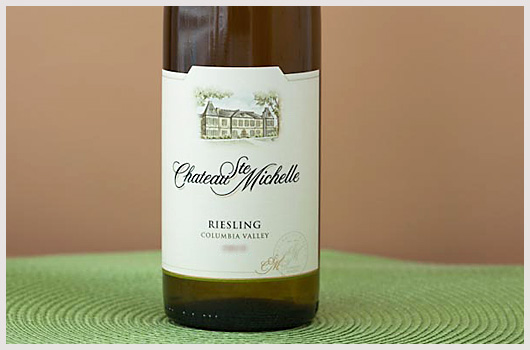
- 2013 Chateau Ste. Michelle Riesling, Washington (about $12 retail)
THE SPLURGE
- 2012 Gunderloch Diva Riesling, Germany (about $26 retail)
by Lorri | Apr 1, 2015 | UnCorked
Muscadet has long been regarded as a cheap and cheerful white wine unable to sustain much more than a reputation for accompanying seafood as a food pairing. But this wine has much more to offer than simplicity.
Muscadet is often confused with the similar sounding Muscat wine. However, the resemblance ends with the first five letters of the names. One is an appellation (Muscadet) for where the wine is produced and the other a grape (muscat).
South and east of Nantes, France’s seventh largest city, is Muscadet country. An easy geographical reference is it’s at the most western end of the Loire Valley just before pushing into the Atlantic Ocean. Muscadet is made 100 percent from the Melon de Bourgogne grape.
There are two styles, Muscadet and Muscadet sur lie. Muscadet is a very light, crisp, refreshing dry wine. Is served young and fresh, giving it a lively dry, refreshing style. Muscadet sur lie spends at least six months aging on its lees (dead yeast cells.) This technique gives the wine more depth and complexity while maintaining its characteristic high acidity.
So the next time you are perusing your wine shop searching for a wonderfully dry, refreshing white wine, take a look at Muscadet.
THE VALUE
- 2014 Signature de Loire Muscadet, France (about $10 retail)
THE SPLURGE
- 2014 Sauvion Muscadet Sevre-et-Maine, France (about $18 retail)
by Lorri | Mar 25, 2015 | UnCorked
As I am typing this wine column I am a bit sentimental, reflecting that March marks Uncorked’s 10th anniversary — reinforcing as I say every year — the feeling that time certainly flies when you’re having fun.
Staying with the sentimental theme, I want to truly thank you, the readers, for supporting the column over the years. You continue to offer ideas, questions and feedback, allowing me to bring useful tips and advice to you each week.
During the past 10 years we have explored many topics and current issues. My goal in writing this column is (and always has been) to offer honest recommendations of wines available in Arkansas. And possibly more importantly, to make the subject of wine approachable to everyone. My hope is this column offers a little something for everyone, whether you’re just beginning to explore the world of wine or you’re a dedicated oenophile.
Over the last couple of years I asked for your thoughts on column ideas and you’ve given me amazing feedback. Again I am asking that, over the next few weeks, you take a moment to send a quick email or letter with a topic you would like to know more about. Don’t be shy. Have you had a wine that tasted like cabbage and want to know why? Did a friend give you a bottle of wine from Italy that you loved? Please, tell me about it. Confused about malo-lactic fermentation and need clarification? Send me a note. Having a party and debating how much wine to buy? Just ask.
I hope, over the next year, we can keep the conversation going and make Uncorked even more relevant. I look forward to many more years of Uncorked to come.
by Lorri | Mar 18, 2015 | UnCorked
Most of us think of pinot grigio as a happy-go-lucky, zippy refreshing wine style. But not all pinot grigio is the same. There are very noticeable differences. Some can be dry with a mineral taste while others are fruity and some are even sweet. My best advice in finding the style you’ll enjoy most is to know what to look for on the label for insight into the styles and why they are different.
Even though it can produce dry, fruity white wines, the grape is actually a mutation of the famed red grape pinot noir. The leaves and grape shape are almost identical to those of pinot noir, but the fruits vary in color from grayish-blue to brownish-pink. Historically, the variety was grown in the midst of pinot noir vines and harvested as a blending grape, adding a touch of softness and acidity to round out the tannins of the red pinot noir.
The initial cause of confusion may be with the name of the grape. Pinot gris and pinot grigio are often used interchangeably. And most of us don’t think of the two as a different styles. But they are.
The most familiar pinot grigio tends to be the famous Italian version with its dry, mineral style. Some describe it as “lacking of fruit” while many consider it a perfect food pairing wine. The simplicity of the flavors, strength in acidity and the “lacking of fruit” means it won’t compete with the flavors on the menu. These are wines for almost all cuisine, from Italian to Thai. Look for the words “Italian,” “stainless steel” and “no oak aging” on the label.
THE VALUE
- 2013 Candoni Pinot Grigio, Italy (about $12 retail)
THE SPLURGE
- 2013 Santa Margherita Pinot Grigio, Italy (about $32 retail)
Some producers choose to use pinot gris in describing a fruit-driven style. Many of these wines are from warmer climates with the taste of more fruit but less acidity. These are some of the most enjoyable styles and are considered to be the best wines for “everyday drinking” and entertaining.
Look for warm-climate growing regions, “malolactic fermentation” and New World wine regions such as Oregon, Washington and California on the label.
THE VALUE
- 2013 Acrobat Pinot Gris, Oregon (about $14 retail)
THE SPLURGE
- 2015 Raptor Ridge Pinot Gris, Oregon (about $22 retail)

by Lorri | Mar 11, 2015 | UnCorked
Enjoying wine for some of us is more than the drink itself. Some are fascinated with the vintage, the region, the vineyard’s history, the owners. But for me, it’s the story behind the design of the wine label that I find so intriguing.
Imagine a boy about 10 years old in a small rural community in California. His parents are in town having lunch and buying groceries. It’s the 1950s and he and his brother are avid collectors of matchbooks from restaurants and businesses. The matchbooks were frequently placed at or near the business’s entrance in large fishbowls and easy for the boys to grab and hide in their pockets.
While the parents are in town the boys are playing around with some of the matchbooks. They not looking for mischief but simply spending time on a sunny afternoon. It’s a familiar game of throwing a book of matches in an attempt to get it to ignite.
But the game takes a turn when they boys catch fire to the grass on the front lawn. They watch helplessly as the grass fire spreads to the family home, burning it entirely to the ground.
As if this were not tragic enough, the fire spreads to the thousand-acre wheat field ready for the family harvest, resulting in a total loss of the year’s crop.
Fast forward many years later, and John Giguiere is sitting with his father discussing names for his new wine venture. His father offers a simple suggestion: If it hadn’t been for the matchbook, things would be different. Thus the name of his wine and the burned edges of the Matchbook label.
THE VALUE
- 2013 Matchbook Chardonnay, California (about $11 retail)
THE SPLURGE
- 2014 Matchbook Tinto Rey, California (about $16 retail)
by Lorri | Mar 4, 2015 | UnCorked
There are hundreds of red wines, but most of us only think of a few familiar varietals such as cabernet sauvignon, merlot and pinot noir. When it comes to learning about wine, and having a better understanding of your palate (what you may like or dislike), these well-known varietals are not necessarily the best to use for your study.
Many wines are blended with other grapes to enhance the flavor, character or even color. Exploring individual wines that offer distinct characteristics is a good place to start.
The lesson: Body
The wine: Australian shiraz
There is no mistaking the term “full-bodied” as you explore most Australian shiraz. The high alcohol content also comes into play. The body of a wine can be detected by how the wine feels in your mouth, also known as “mouth feel” in wine speak. As you taste an Australian shiraz consider the viscosity. For a better understanding of mouth feel, milk is a good comparison. Consider skim milk as the lighter version, whole milk as having some heft, then ending with the full mouth feel of heavy cream.
THE VALUE
- 2013 Jacob’s Creek Reserve Shiraz, Australia (about $14 retail)
THE SPLURGE
- 2012 Leeuwin Art Series Shiraz, Australia (about $42 retail)
The lesson: Tannin
The wine: California petite sirah
It seems reasonable that a grape named “petite” would be soft, dainty and produce a light-bodied wine. But this grape is anything but petite, with its robust, spicy tannic structure. The petite sirah grape is a very small grape with thick skin, giving the wine its high tannin and deep color. Tannin is an easy lesson for wine drinkers to grasp if you just think of the puckery, drying sensation you experience from tasting strong unsweetened tea.
THE VALUE
- 2013 Concannon Petite Sirah, California (about $14 retail)
THE SPLURGE
- 2013 Earthquake Petite Sirah, California (about $32 retail)
The lesson: Herbaceous/vegetal
The wine: Chilean carmenere
Chilean carmenere is much like merlot, with its approachable style of low tannin and acids. It has distinct fruity flavors of plum and cherry. But more importantly, it is a prime example of a wine with “green,” “vegetal” or “herbaceous” notes. In addition to the fruity flavors, there is the subtle aroma and taste of bell pepper. The technical term is Pyrazine, an aromatic organic compound that is the source of the herby and grassy note.
THE VALUE
- 2013 Root 1 Carmenere, Chile (about $12 retail)
THE SPLURGE
- 2013 Axel Carmenere, Chile (about $26 retail)
The lesson: Alcohol perception on the palate
The wine: California zinfandel
Zinfandel grapes, when grown in a warm climate, have a tendency to create a higher than average alcohol wine. Some of these wines can be 14 percent to 15 percent alcohol, and it is easy to detect it, as opposed to that of lower-alcohol wines. The best process for detecting alcohol levels on your palate is rather straightforward: Does the wine create a burning sensation on the back of your throat? If so, then it is a high-alcohol wine. Many high-alcohol wines have a wood or spice taste, with the fuller-bodied perception attributable to the alcohol level.
THE VALUE
- 2013 Bogle Old Vine Zinfandel, California (about $13 retail)
THE SPLURGE
- 2013 Force of Nature Zinfandel, California (about $25 retail)