by Lorri | Feb 4, 2015 | UnCorked
Sparkling wine has a special allure. And for those of us who love it, it only takes one sip to understand why it may have inspired Dom Perignon to declare, “Brothers, brothers, come quickly, for I am drinking stars.”
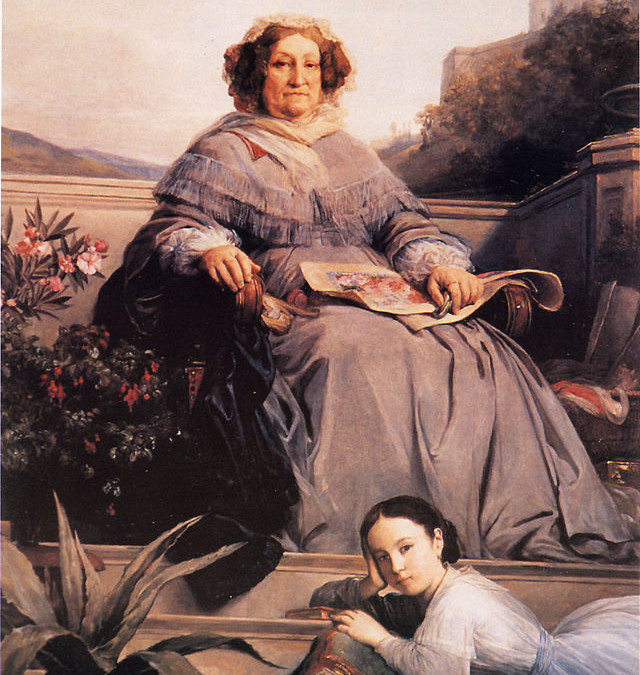
I’ve written before about many of the innovations in winemaking that made Champagne possible, from changes in the type of fuel used to fire the glass ovens to new bottle closures. But a lesser known branch of the bubbly timeline is the legend of Barbe Nicole Ponsardin, better known as Madame Veuve Clicquot. Widowed at the age of 27, Clicquot was already an icon in the royal courts throughout Europe, but after the death of her husband she quickly went to work focusing on establishing her brand. By the early 1810s her wines had gained international acclaim.
But there was one little issue with the wine in the expanding markets. It was only a cosmetic thing but still a problem: The wines were cloudy with sediment.
As the story goes, Clicquot was sitting at her wooden table in the cellar when she got the idea that would solve the problem. Remember it’s only a legend; she stood up, turned the table on its side and had her cellar master cut holes for the bottles to be placed neck down at an angle, creating the the riddling rack.
The rack allowed a bottle of wine to be stuck sur point, or upside down. Every day a cellar assistant would gently shake and twist the bottle (a process called remuage) to encourage wine solids to settle to the neck. When this was completed, the cork was carefully removed, the sediments ejected, and a small replacement dose of sweetened wine added. The process is still used today.
This innovation led to Clicquot being known by her peers as “La Grande Dame” of Champagne.
So, the next time you drink Champagne, be sure to raise a glass in admiration of those who helped bring the sparkle to our bubbles.
THE VALUE
- NV Veuve Clicquot Yellow Label, France (about $69 retail)
THE SPLURGE
- NV Veuve Clicquot La Grande Dame, France (about $225 retail)
by Lorri | Dec 31, 2014 | UnCorked
Tonight most of us will be toasting with a glass of bubbly. So it is fitting to take a moment to consider how this celebratory drink got its sparkle.
There are many methods to get fizz in the glass, but this story is how it is done with Champagne. It begins as any other wine: Grapes are picked, pressed and fermented. Then the magic begins. The first step is blending. Almost an art form, the winemaker will taste and select from separately fermented vats from individual vineyards to create the ideal recipe.
The carefully blended wine will then go into bottles, along with a small amount of yeast and sugar. This crucial step distinguishes bubbly from all other styles of wine. This is the second fermentation. As the yeast feed on the sugar, tiny bubbles of carbon dioxide are created and remain trapped inside.
But this is still an early part of the journey for fabulous Champagne.
The wine will then be left on its “lees” (dead yeast) for a few weeks or in some quality Champagnes even months. This gives the wine time to absorb the yeasty, rich aromas we love. Next is the final magic trick: taking away the tiny yeast without getting rid of the bubbles. The bottles are placed horizontally, top of the bottle down, in hinged wooden racks kept in dark cool cellars. For about two months, each individual bottle (sometimes up to 40,000 bottles a day) will be turned by hand. Obviously these are the most prestigious of Champagnes.
The ending process is not as romantic as the slow turning of the bottles, but it is just as critical : The necks of the bottles are put into a freezing solution where the dead yeast formed into a sediment. This ice plug is shot out of the bottle, a process called “disgorgement,” and then each bottle is topped with a “dosage,” a mixture — usually a small amount of sugar. And finally, the famous Champagne is closed with the wire and cork.
As you ponder the price of amazing bubbly, don’t forget how much love and attention went into this bottle along with the handcrafted spirit behind this artisan craft.
THE VALUES
- NV Piper-Heidsieck Brut, France (about $45 retail)
- NV Pierre Peters Blanc de Blanc, France (about $53 retail)
THE SPLURGE
- 2004 Perrier-Jouet Belle Epoque, France (about ($199 retail)
by Lorri | Dec 3, 2014 | UnCorked
This is the time of year when many of us start looking for unique, yet intimate entertaining ideas. Unique doesn’t have to mean elaborate ice sculptures or expensive cuisine. Think about adding some sparkle with holiday wines.
MAKE IT SPARKLE
It may not be to everyone’s taste, but Champagne or sparkling wine can be served throughout an entire meal or evening. Begin with brut non-vintage Champagne or sparkling wine as an aperitif as guests arrive. This wine will match with any food selection with a salty characteristic. For the main course, pair a fish (salmon, sole or sea bass), poultry or white meat topped with a beurre blanc, cream sauce or hollandaise with vintage Champagne or a premium sparkling wine. If a red meat or game dish is your preference, sparkling rose is an ideal match. When it comes to dessert, avoid chocolate or ice cream and serve a soft, creamy, fruity pastry with a sec (sweet) or demi-sec Champagne.
THE VALUE
- NV Treveri Cellars Blanc de Blancs, Washington (about $16 retail)
THE SPLURGE
- NV Moet and Chandon Rose Imperial, France (about $70 retail)
JUST DESSERTS
Offering a holiday party menu of dessert and wine pairings can keep the party planning minimal, and is ideal if guests will be attending other functions or dropping into several parties the same evening. One classic pairing is vanilla bean ice cream with the delectable rich and sweet Pedro Ximenez Sherry poured over the top. Nut desserts like pecan pie, chestnut mousse or walnut tarts match well with fortified wines such as Royal Tokaji, Cream Sherry or Australian Muscat. Cream- or dairy-based desserts such as cheesecake are complemented by late harvest Gewurztraminers. Egg desserts such as custards or souffles pair well with Tawny Port.
THE VALUE
- 2012 Hogue Late Harvest Riesling, Washington (about $12 retail)
THE SPLURGE
- NV Osborne Tawny Port, Portugal (about $22 retail)
CHARCUTERIE AND CHEESE
A meat and cheese tray takes on a special flair when it is composed of locally cured meats and hand-made cheeses. The menu sets itself up for an easy drop-in entertaining opportunity with minimal preparation, zero cooking time and a fun casual setting. Salami, sausage, prosciutto, chorizo and jamon serrano each pair ideally with red wines as do many cheeses. Consider adding a cheese board pairing of blue cheeses, aged goat cheeses, and nutty sweet cheeses like gruyere, cheddar and parmesan. Wines that pair well with most charcuterie and cheeses include cabernet sauvignon, pinot noir, merlot, red blends, port and oloraso sherry. An added bonus — there’s no need to have specific individual wine and food pairing options. Let your guests (and yourself) explore the pairing choices.
THE VALUE
- 2013 Force of Nature Red Blend, California (about $17 retail)
THE SPLURGE
- 2013 Migration by Duckhorn Pinot Noir, California (about $43 retail)
by Lorri | Feb 12, 2014 | UnCorked
 Valentine’s Day is Friday and if you’re stuck on what wine to buy, here are some ideas. With so many choices, I called local retailers for advice on what is trending for love birds.
The most popular gift for female drinkers (with overwhelming consensus) was Champagne or anything that bubbles. I admit there is a special something about the celebratory feel bubbly offers. If you are looking to genuinely impress, consider finding vintage Champagne with a year special to your valentine, such as the year of your first date, wedding anniversary, major life accomplishment or first child. Brut (dry) rose bubbly was another popular recommendation. After all, what is more romantic than the pink or rosy color of flowers, candy and hearts?
For men and women alike, robust red full-bodied wine is another favorite for a valentine. I would recommend asking for assistance from your fine wine retailer. With the many styles available, sometimes knowing the story behind a vintage can aid in selection.
My favorite and most romantic of reds is the Calon Segur. The label of this prestigious property of Saint-Estephe has an elegant heart surrounding the name, making it an ideal choice for the occasion. It’s said that owner Marquis Nicolas-Alexandre de Segur claimed, “I make wine in Latour and Lafite but my heart is in Calon” as the reason behind the heart.
Consider an aged red wine rather than a bottle from the most recent vintage. I always find these wines offer an added romance of longevity and commitment to time.
THE VALUES
- NV Segura Viudas Brut Rose, Spain (about $12 retail)
- 2011 Maddalena Cabernet Sauvignon, California (about $19 retail)
THE SPLURGES
- NV Roederer Estate Brut, California (about $28 retail)
- 2010 Reynolds Family Winery Persistence Red, California (about $57 retail)
- NV Veuve Clicquot Yellow Label, France (about $68 retail)
- NV Moet & Chandon Imperial Rose, France (about $77 retail)
by Lorri | Dec 25, 2013 | UnCorked
 “I drink [Champagne] when I am happy and when I am sad. Sometimes I drink it when I’m alone. When I have company I consider it obligatory. I trifle with it if I’m not hungry and drink it when I am. Otherwise I never touch it unless I’m thirsty.” – Madame Bollinger
It may be its romantic history or more simply its splendid taste alluring wine drinkers around the world to raise their glasses at the stroke of midnight on New Year’s Eve. But for all its elegance, Champagne can be a confusing subject.
Champagne is made from a specific combination of grapes grown in France’s cool-climate vineyards. (By law only wine produced in the Champagne region of northeast France can be called Champagne.) Pinot noir gives structure, body and that delicate fruit character; chardonnay is the elegance behind the blend with floral and fruit components; and pinot meunier provides the dominant aspect to the fragrance you find in each glass. Many people ask why Champagne is not red because most of the grapes are red wine grapes. The grapes are pressed, letting the juice run out without skin contact, where color is obtained.
The complex process of producing sparkling wine is the main contributing factor when it comes to the cost of higher-quality bottles. The longer and slower the wine making process, the more expensive and complex the final wine style will be. If you add the bubbles quickly by artificial methods the result is a simple style, while adding them slowly, naturally and elaborately results in a more complex wine and higher price tag.
A Champagne that doesn’t have a specific year on the label is considered “nonvintage” (NV) and means it’s a mixture of grapes from several years. NV is about twothirds of all Champagne sold.
Vintage champagne is produced only in an exceptional year and declared by the producer. This wine is generally more expensive because of its low production and extra time in all areas of the wine making and cellaring process. Blanc de blanc is made from the chardonnay grape. Blanc de noirs are made from pinot noir and pinot meunier grapes. “Brut” is the driest option. “Extra dry” is actually less dry than brut and carries a small amount of sweetness on the palate. “Sec” is slightly sweet; “demi-sec” is moderately sweet; “doux” is sweet and rare.
Bonne annee.
- NV Piper Heidsieck Brut Cuvee, France (about $46 retail)
- 2004 Moet and Chandon Brut Imperial, France (about $95 retail)